Address: South Tripura
Mr. Kamal Kanti Banik has been a steadfast advocate for promoting sustainable livelihoods, especially among women, tribal communities, and marginalized groups across Northeast India. Recognizing that poverty and unemployment are deeply interconnected with environmental degradation and social instability, he has implemented numerous programs that not only build skills but also connect individuals to credit, markets, and sustainable income sources.
His approach to livelihood development is rooted in practical, community-driven models. These models emphasize natural resource-based entrepreneurship, self-help group (SHG) empowerment, and vocational training tailored to local needs. Through strategic partnerships with national and international organizations, Mr. Banik has helped thousands transition from vulnerable circumstances to self-reliant livelihoods.
One of his key collaborators has been the North Eastern Development Finance Corporation Ltd. (NEDFi), a financial institution promoting entrepreneurship in the region. With their support, Banik implemented credit-linked programs that enabled rural artisans and producers to scale up enterprises in agro-processing, weaving, and traditional crafts.
He also worked closely with SIDBI (Small Industries Development Bank of India) to promote SHG formations in remote villages. These groups, primarily led by women, were trained in financial literacy, savings management, and small business operations, transforming them into micro-entrepreneurs.
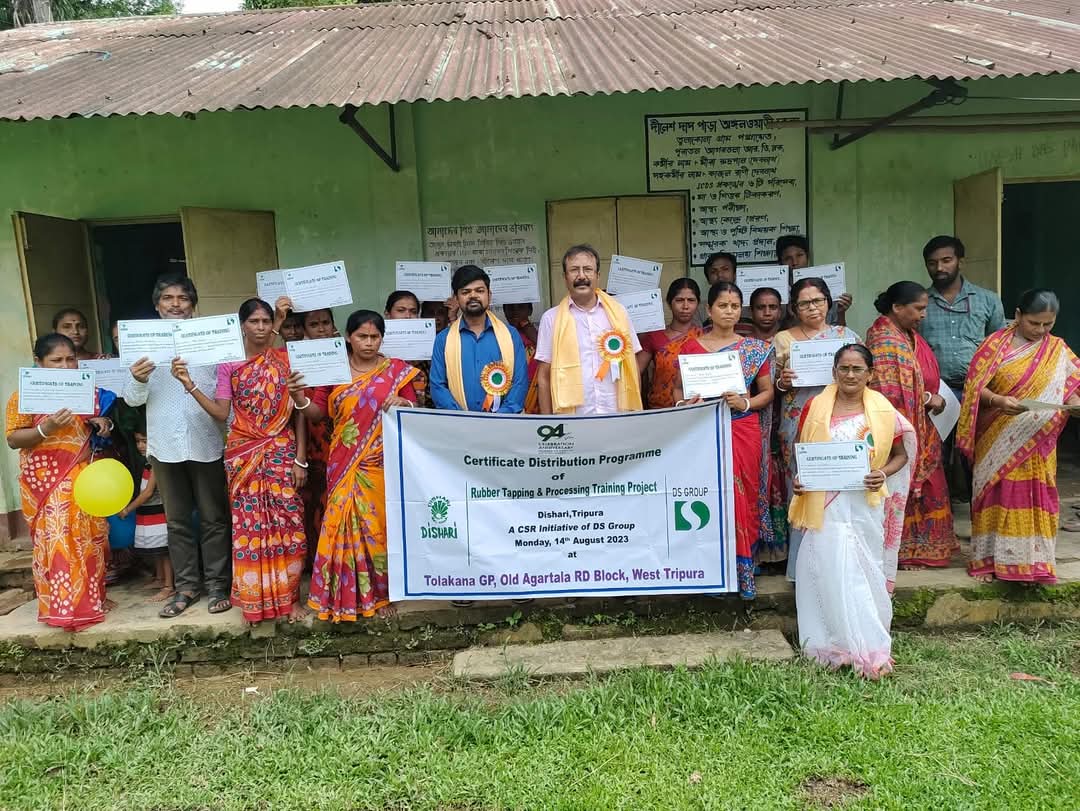
Another notable partner in his mission was RGVN (Rashtriya Gramin Vikas Nidhi), which provided micro-finance support for grassroots income generation. With their assistance, Banik introduced programs in areas such as mushroom cultivation, incense stick making, livestock rearing, and bamboo craft, creating new avenues of employment in forest-adjacent communities.
In the realm of corporate partnerships, Mr. Banik collaborated with the DS Group (Dharampal Satyapal Group) through its CSR programs. These initiatives combined livelihood training with healthcare and nutritional support, helping families improve their quality of life while increasing household incomes.
He also worked with Reach India, a social enterprise that helps NGOs expand health and economic initiatives. Through this platform, he trained community leaders and youth in entrepreneurship, business planning, and market linkage.
A major highlight of his work includes collaboration with USHA International, known for empowering women through sewing schools across India. With USHA’s support, he established skill training centers where women were taught tailoring, embroidery, and garment production, enabling them to become financially independent.
Further strengthening this ecosystem was his work with the Department of Textiles, Government of India, where he facilitated training in handloom, jute, and bamboo crafts. These programs preserved traditional skills while adapting them for modern markets, thus offering a blend of heritage and livelihood.
Across all these partnerships, Mr. Banik ensured that skill development wasn’t limited to workshops alone—it was linked to finance, mentorship, and sustainability. His programs have helped participants not just acquire skills but build resilient, eco-friendly, and income-generating enterprises.
Through his commitment to inclusive development, Mr. Banik has transformed skill-building into a tool for dignity, empowerment, and long-term community resilience. His work in livelihood promotion stands as a replicable model for grassroots economic development across India.
Contact us