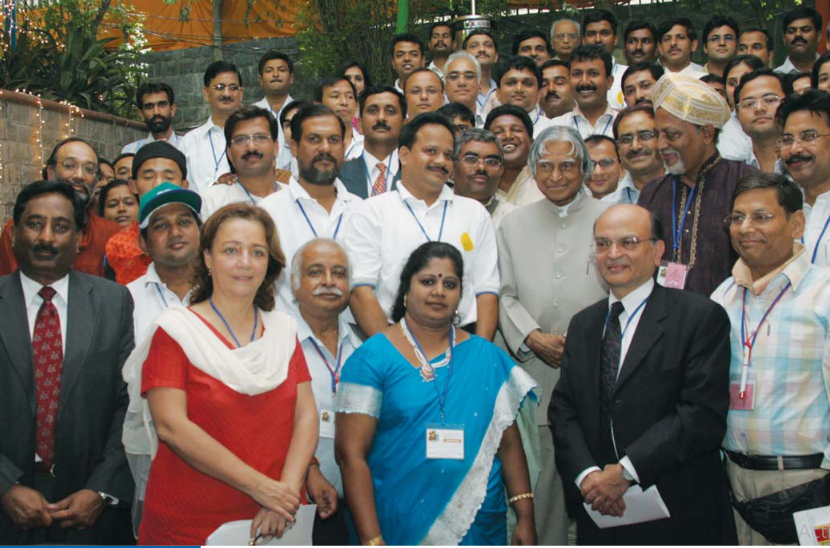
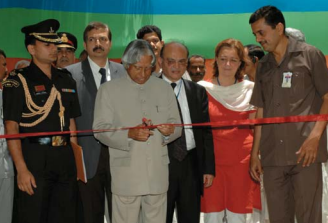
The President of India, Dr. A.P.J. Abdul Kalam, inaugurated the World Bank’s second India Development Marketplace (IDM 2007) in New Delhi on 29 May 2007. The IDM represents the Bank’s search for innovative development ideas from the grassroots.
This year’s competition called for entries around the theme, ‘Grassroots Innovations for the Protection and Management of Natural Resources’.
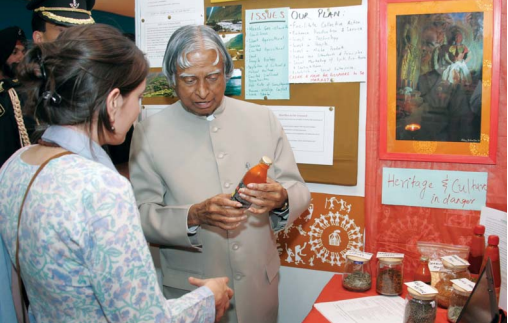
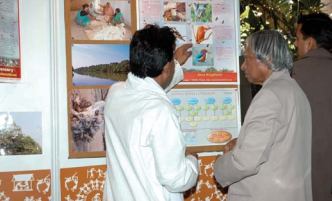
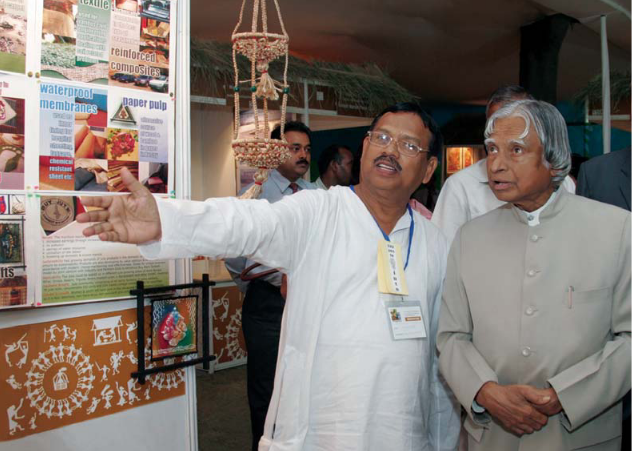
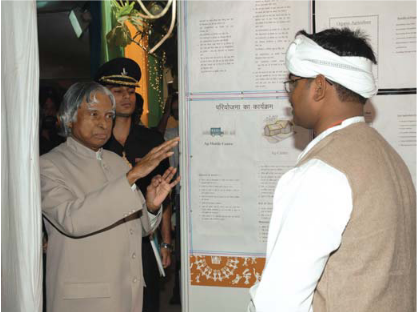
Inaugurating the Marketplace, His Excellency Dr. Abdul Kalam, said, “My interest to participate in this meet arises from the focus of the program towards sustainable rural development in India.” As he went around the colorful kiosks, the President took a keen interest in the innovations displayed. Being a scientist himself, he questioned the participants about the cost-effectiveness and easy applicability of their projects in the rural areas.
This is the second time that President Kalam has inaugurated the Bank’s IDM. The first time was in 2004 when the competition called for innovations in bringing services to the rural poor.
Mr. Praful Patel, the World Bank’s Regional Vice President for South Asia complemented the creativity in evidence in many spheres in India saying, “The dynamism we see in India today is largely due to the efforts of a new generation of creative thinkers and doers.”
“And, as we have seen today, there are many more innovative thinkers whose outof-the-box thinking can lead to simple and creative solutions to the world’s growing environmental challenges,” he added.
Highlighting the diversity of regions represented, Ms. Isabel Guerrero, the World Bank Country Director for India said, “It is an honor for us to be able to host fifty social entrepreneurs who have come from almost every state in the country, bringing in different ideas to improve the quality of life by protecting natural resources.”
Stressing the importance of protecting natural resources in the face of global warming and climate change, she added, “The topic is at the centre of one of the most pressing challenges facing our world today.”
The IDM 2007 received an overwhelming response. Over 2,500 proposals were received. These were thoroughly reviewed by several rounds of development experts.
Fifty of the most innovative and potentially viable proposals were invited to present at the Marketplace held at the Bank’s New Delhi office.
From these 50 proposals, an eminent jury selected 19 winners on the day of the event. The twentieth winner was chosen by popular vote and given the People’s Choice Award. Winners received the Indian Rupee equivalent of US$ 20,000 to implement their proposals over a two year period.
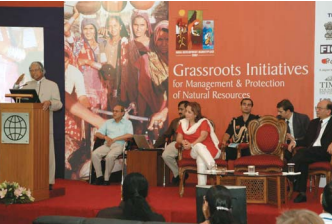
Fifty social innovators – from the 2,500 proposals received – have been selected as finalists through a highly transparent, systematic and rigorous assessment process. They will each receive the rupee equivalent of US$ 20,000.
| Proposal ID | Project Idea |
|---|---|
| 23 | Promotion of home composting with green earth machines |
| 102 | Environmental protection, preservation of traditional mural painting, and livelihood for tribal and rural populations |
| 151 | Creation of sustainable community-based organizations to lead innovative initiatives for management and protection of natural resources |
| 166 | Sustaining humans and nature in the Sundarbans |
| 184 | Raising of Calliandra Calothyrsus plants and production of honey, propolis and wax and pollen, API-Queen and Vernom |
| 245 | Institutionalizing community-led action for sanitary survey |
| 304 | Groundwater recharge for potable use through rainwater runoff recycling |
| 337 | Solar parabolic concentrating cooker application for extraction of Cashew Nut Shell Oil (CNSL) along with household cooking |
| 360 | Waterless toilets for the poor and the needy |
| 427 | Empowering tribal communities through lac cultivation |
| 455 | To introduce alternative cropping pattern for reducing crop predation damage from wildlife for communities around Tadoba Andhari Tiger Reserve (TATR) |
| 521 | Creating livelihood through organic farming – a model |
| 526 | Cleaning the foothills of the Himalayas near Rishikesh through comprehensive solid waste disposal and entrepreneurship |
| 585 | U-SEE – Unlimited saving of electrical energy |
| 593 | Sustainable drinking water supply in fluoride-contaminated zones of Rajasthan |
| 632 | Simple single axis rooftop wind generator |
| 644 | Training on cow-based organic farming |
| 677 | Capacity-building of rural women to produce and market cashew apple juice |
| 700 | Evolving and developing sustainable livelihood package of practices for the farmers of stress-prone ecologies |
| 703 | Energy efficiency enhancement in existing surface-mounted pumpsets used by poor farmers in open wells by simple floating platform arrangement |
| 710 | Wetland utilization through organic farming for vegetable production Ekai Thabee (Nepunia Oneracia) |
| 731 | Strengthening traditional techniques and technologies in organic farming for women in Gujarat |
| 777 | Promotion of innovative and sustainable irrigation solution (managed by SHGs) to underprivileged farmers in earthquake and drought affected taluka of Patan district |
| 788 | Sustainable agriculture development through AG-mobile centre |
| 855 | Human power-based lighting solution for nomadic and tribal people |
| 863 | Living with cohesion |
| 873 | Converting organic waste into manure in cities |
| 876 | Sustainable development and conservation of threatened fish species in Muhuri river of Bagafa rural development block of South Tripura district |
| 884 | Taking baseline data on management of national parks and sanctuaries (1935-2005) into public domain to encourage public participation in protected area management |
| 948 | Removal of heavy metals from industrial effluent using tea-waste |
| 971 | Production of Chillika Lake fish derivatives |
| 1015 | Rural electrification project |
| 1019 | Solar energy solutions for Primary Health Centres (PHC) |
| 1082 | Create an ecosphere in the market-to-make eco-livelihoods viable and sustainable |
| 1124 | Use of well-in-pond and pond-in-pond techniques for freshwater harvesting from saline water |
| 1267 | Community watershed project |
| 1296 | Use of Neem and Pongamia soaps in the Integrated Pest Management of vegetables |
| 1303 | Development of technology for use of waste-water instead of bore water for car washing at automobile showroom |
| 1389 | Establishment of conservation reserve between Nagzira sanctuary and Nawegaon National Park with community participation |
| 1402 | Intercropping in regenerating village forest/protected forest areas as recurring community incentive for sustainable community forest management in Similipal bio-sphere zone of Orissa |
| 1445 | Village-based Integrated Pest Management services through women self help groups |
| 1468 | Sustainable generation through utilization of Neem-based technology |
| 1491 | Reduction of excessive fluoride in potable water with the help of bio-membranes (onions) |
| 1549 | New vistas on Jute |
| 1599 | Urban soil waste management |
| 1608 | Aquifer recharge through subsurface infiltration system (SIS) |
| 1649 | Demonstration and performance evaluation of solar tunnel drying system |
| 1658 | Pilot project on decentralized wastewater treatment for small and medium-size towns |
| 1693 | Capacity building and implementation of environmental sound and eco-friendly Bamboo-reinforced Cement Mortar (BRCM) low-cost household biogas plant |
| 1696 | Communities initiatives for conservation of bio-diversity resources in Sikkim |
Am delighted to participate in the inauguration of India Development Marketplace-2007 (IDM-2007) organized by the World Bank. My interest to participate in this meet arises from the focus of the program towards sustainable rural development in India.
I had participated in the inauguration of India Development Marketplace-2004 (IDM-2004) where 20 innovations were selected. Out of these, two innovations have found place in today’s exhibition based on its sustainable operation in the rural sector. One pertains to dew harvesting for drinking water in coastal Gujarat. I understand dew condensers have been successfully installed in a school, a warehouse and a few private homes in the area. The second one is on Assam’s River Network Harnessing System being used as a medical delivery system to isolated regions. The originally conceived boat as a “ship of hope” is now being used to ferry medical
teams to deliver healthcare throughout the year to the people in Assam region.
National Innovation Foundation : -
On 12th February 2007, I participated in the National Innovation
Foundation awards function. During the last seven years, I found
NIF has identified a number of innovative practices which have
lead to over 100 patents including few international patents.
The important aspect of this work is the innovation practices
and products have been generated at the grassroot level without
any external assistance. The World Bank may like to study the
innovative practices as reported by NIF and select a few that
has potential to make a change in the life of the rural people.
Let me now discuss certain rural programs that have been carried out by district administration, NGOs, self-help groups, institutions and individuals which are benefiting rural areas in a few states.
One-village-one-product and PURA : -
The members of Periyar PURA in Vallam, Thanjavur district in
Tamil Nadu have created a strategic partnership with Japan
External Trade Organization (JETRO) of Japan. During the last
eight months, the people of Periyar PURA villages
technologically supported by Periyar Maniammai College of
Engineering for Women have worked with experts from JETRO on
various products for which core competence and raw material is
available in Thanjavur district.
The interaction with JETRO specialists included comparisons of Japanese products, discussion on raw material selection, technical advice on product development and final quality inspection. Based on this intensive interaction, Vallam people produced 123 products and JETRO selected 40 out of them for the international market.
Once the product is finally accepted, it will be converted as a commercial business proposition which will enhance the economic activity in all the 65 villages in the Periyar PURA rural cluster. Now, let me talk about another example which has transformed the livelihood of the people in Assam.
Innovation in duck rearing : -
Gumoria is a village in Assam inhabited by marginal farmers and
landless laborers. This has been transformed into a model
village following the formation of 50 self-help groups and about
500 women of the village are engaged with the groups, which not
only improved the economy of the village, but also improved the
level of education as with the extra income, the people of the
village can now send their wards to schools.
With the help from the Government, the self-help groups of the village started rearing ducks and assistance was given to the women in the form of training, marketing, veterinary aid etc, while, apart from the assistance given by the Government, the banks also provided financial support to the groups. The groups have so far earned more than Rs 1 crore against the investment of Rs 26 lakh, which includes a bank loan of Rs 7.50 lakh.
Women of the groups are rearing ducks in a scientific manner under guidance from the faculty members of the State Institute for Rural Development which has got the hybrid technology for increasing the yield per duck and also increasing protein content in the eggs in partnership with agricultural scientists from Kerala.
Value addition in garments and apparels : -
I also visited Sialguchi village where the entire community is
proudly engaged in the production of famous Assam silk sarees.
The whole village population of about 2,500 families is busy in
nurturing silk worm, producing silk thread, weaving the fabric
and creating multiple designs through hand loom. What is needed
for increasing the earning capacity of Sialguchi people is the
infusion of incremental technology in a big way.
I would like to present how it can be done based on our experience in Kancheepuram silk industry in Tamil Nadu. The silk industry in Kancheepuram is one of the fastest growing industries in India. The industry currently employs more than 30,000 weavers in the art of saree making. The industry had to compete with the synthetic fiber industry in many aspects. The industry was on the brink of extinction due to the obsolescence of the designs and design making procedures. This is because, design adds splendor to a saree and forms an integral part of its exquisiteness. Introduction of computerized Jacquard borders in Kancheepuram silk saree has helped in the revival of the industry. The use of ICT has not only helped in creating new and complex designs but also reduced the time involved in the design. There has been an increase in the exports. The World Bank in India • July 2007 12 The visualization of saree designs ahead of its production and the ability to create new color combination at the click of a mouse has increased the flexibility and reduced the time for realizing new designs. Though the materials and the techniques are changing with the market demand, the motifs are still conventional to hold the custom and tradition of the Kancheepuram saree. This type of technological intervention will enable Sialguchi people to make their product internationally competitive.
Integrated rural development in Uttar Pradesh : -
Recently I visited Raniganj Village cluster in Pratapgarh
district in Uttar Pradesh. There, BAIF (Bharathiya Agro
Industries Foundation) has been implementing an integrated rural
development program. As a part of this, a revolution has been
created in growing amla orchard in the land affected by
salinity. Amla is known to be a home fruit and has medicinal
value including Vitamin-C. Amla has become an essential
component of the food, drug, pharmaceutical and cosmetic
industry.
BAIF has trained 300 local farmers in cultivating amla in Raniganj. BAIF have supplied grafted plants of superior variety which need very little water and care. Farmers have also been assisted in setting up irrigation facilities using shallow tube-wells and soil amendments to reduce saline content. The amla plants have started yielding from fourth year and yield of fresh fruit has increased from 100 kg in the fifth year to 200 kg per year after the seventh year.
The part of the fresh Amla produce from the high yield variety plants, is sold in the local market. Remaining Amla is being processed by the Raniganj citizens. The processing is expected to increase to 300 quintals in 2007-08. The growing of Amla and processing has resulted in increasing the revenue of the farmers in the village substantially.
I have shared these experiences only to emphasize the need for World Bank to have a data base on development needs of a particular region through state machinery and also private agencies. This data base
Conclusion : -
World Bank, in partnership with governments, is developing
strategies to meet the development agenda of the nations. While
we are happy that Indian economy is in the ascent phase and our
GDP is growing at nearly 9 percent per annum, it is evident that
the economic growth is not fully reflected in the quality of
life of large number of people, particularly in the rural areas
and even in urban areas
Hence, we have evolved what is called National Prosperity Index (NPI) which is a summation of (a) annual growth rate of GDP; plus (b) improvement in quality of life of the people, particularly those living below poverty line plus (c) the adoption of value system derived from our civilizational heritage in every walk of life which is unique to India. That is NPI=a+b+c. Progressive reduction from 220 million people who are present living below poverty line to near zero by 2020 by increasing their quality of life in terms of food, shelter, water, energy, infrastructure, education and health will be the indicators of the growth of ‘b’ in percentage, ‘c’ is a function of promoting joint family system, creation of a spirit of working together, leading a righteous way of life, removing social inequities, and above all promoting a conflict free, harmonious society. The social status and civilizational heritage of societies being served is considered as an important component for integrated development. In this respect, the component “c” is unique to every country.”
National Prosperity Index with these three unique components indeed can be spread by World Bank so that nations can use this index as an indicator of integrated development of their country.
With these words, I inaugurate the India Development Market Place 2007. My greetings to the World Bank and all the participants of IDM-2007 and congratulations to the finalists and the winners.
May God bless you.