Address: South Tripura
When forests fall silent, rivers run dry.” – Kamal Kanti Banik
Mr. Kamal Kanti Banik’s journey in environmental conservation spans over three decades of passionate fieldwork, policy advocacy, community mobilization, and scientific collaboration. His work reflects an unwavering commitment to preserving biodiversity, protecting natural resources, and fostering sustainable livelihoods—particularly for forest dwellers and marginalized communities.
🌱 Early Concerns and Research
Even during his youth, Banik showed a deep concern for the deteriorating health of the environment. One of his most influential research publications, “Pharmaceuticals in Drinking Water: A Future Water Quality Threat”, was published in the Indian Journal of Environmental Protection in 2006. This peer-reviewed paper highlighted the ecological risks of pharmaceutical contamination in water sources—long before it became a widely acknowledged environmental crisis. The study marked a turning point in his career as it married environmental science with social impact.
🛶 Conservation Projects and Collaborations
Mr. Banik has actively collaborated with several national and international organizations on large-scale conservation and natural resource management programs. Some of his most significant contributions include:
🔹 Natural Resource Management (NRM)
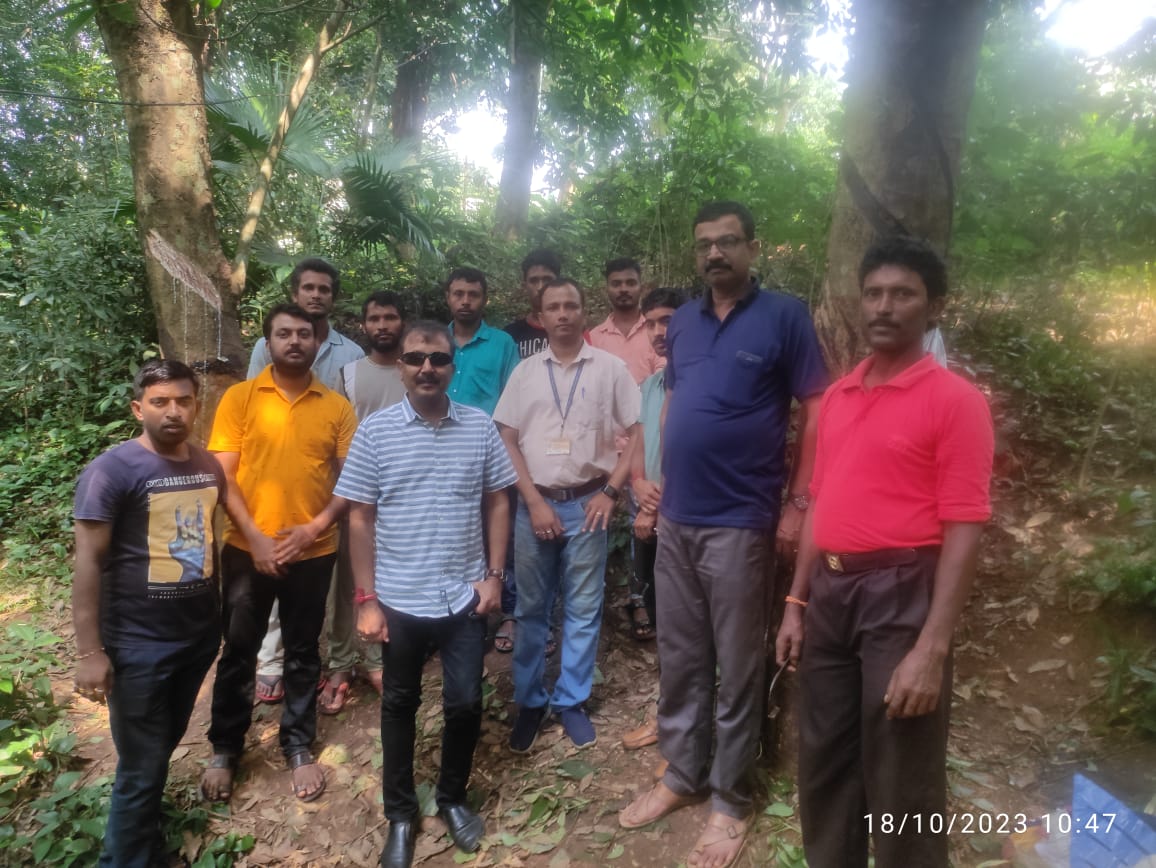
Through Dishari, his NGO based in Tripura, Banik implemented projects focused on afforestation, soil conservation, community forest management, and watershed revival.
- Ministry of Environment and Forests (India): Supported reforestation and community green cover programs in Tripura.
- NRMST (Natural Resource Management Society of Tripura): Worked on field-level afforestation and biodiversity projects under the Indo-German Development Cooperation (GIZ).
- UNDP Pilot Project: Focused on natural resource-based livelihoods to address both poverty and environmental degradation.
🔹 Biodiversity & Wildlife Conservation
Mr. Banik has served as Principal Investigator and State Coordinator in biodiversity studies, especially concerning endangered bird species and mammals.
- Royal Society for the Protection of Birds (RSBP), UK: Sponsored Banik’s work on the White Rumped Vulture, a critically endangered bird species. His research helped monitor population decline and habitat threats.
- Indian Bird Conservation Network (IBCN): As State Coordinator (Tripura) for six years, he led extensive bird surveys and local engagement programs.
- Trishna Wildlife Sanctuary (Tripura): Led ecological studies on bird species in this protected reserve.
- ATREE (Ashoka Trust for Research in Ecology and the Environment): In collaboration with Ford Foundation, Banik trained local youth in skill-based biodiversity conservation linked to livelihood generation.
🔹 Water Conservation & Eco-Hydrology
Recognizing the threat of depleting water sources, Banik co-founded Save the Water Sources in the USA—a nonprofit committed to advocating for clean water and groundwater protection globally.
- He addressed pharmaceutical pollution, river depletion, and wetland conservation in public seminars and grassroots workshops.
- He integrated traditional ecological knowledge with modern conservation science to design water-sensitive livelihood models in forested regions.
🔹 Fisheries & Aquatic Biodiversity
In partnership with the National Bureau of Fish Genetic Resources (NBFGR), Banik worked on preserving fish biodiversity in local rivers and wetlands. He was a regional committee member contributing to strategies that balanced conservation and rural livelihoods dependent on fishing.
🔬 Science-Based Conservation + Community Action
What sets Banik apart is his ability to translate complex scientific understanding into community-driven action. His work doesn't stop at field surveys or data collection—it empowers local populations, particularly tribal women and youth, with the skills and awareness to become guardians of their environment.
He often emphasizes that conservation cannot succeed unless it supports the economy of those living closest to nature. His projects integrate livelihoods with ecological restoration, ensuring sustainable outcomes.
🏞️ Global Exposure and Field Research
- Grameen Bank, Dhaka: Studied environmental impacts of micro-enterprises during field exposure.
- College of Fishery (Central Agricultural University): Shared his experience on aquatic ecosystems and community involvement in biodiversity.
- CAPART and NEHU: Facilitated studies on Joint Forest Management (JFM) models, a participatory approach to forest governance.
🔍 Summary of Organizations & Terms
| Sl No | Term / Org | Explanation |
|---|---|---|
| 1 | RSBP | Royal Society for the Protection of Birds (UK) – supports global avian conservation. |
| 2 | IBCN | Indian Bird Conservation Network – a collaborative effort between BNHS, BirdLife International, and Indian environmental groups. |
| 3 | NBFGR | National Bureau of Fish Genetic Resources – apex Indian institute for fish biodiversity research. |
| 4 | UNDP | United Nations Development Programme – promotes sustainable development, often through natural resource-based livelihoods. |
| 5 | GIZ (Germany) | Deutsche Gesellschaft für Internationale Zusammenarbeit – a global development agency supporting Indo-German conservation projects. |
| 6 | ATREE | Ashoka Trust for Research in Ecology and the Environment – leading Indian environmental think tank. |
| 7 | CAPART | Council for Advancement of People’s Action and Rural Technology – funds tech-based rural development. |
| 8 | Dishari | Banik’s own NGO working extensively in forest and environmental conservation in Tripura. |
Contact us