Address: South Tripura
Throughout his three-decade-long journey in social entrepreneurship and environmental advocacy, Mr. Kamal Kanti Banik has cultivated a powerful network of partnerships with globally recognized institutions, multilateral development agencies, and grassroots organizations. These alliances have not only enriched his understanding of sustainable development but also enabled him to apply innovative, proven frameworks in the context of Tripura’s unique socio-ecological challenges.
One of Mr. Banik’s early and formative exposures was to Grameen Bank in Dhaka, Bangladesh, founded by Nobel Laureate Prof. Muhammad Yunus. This experience introduced him to pioneering models of microfinance and community-led poverty alleviation, which later informed his approaches to rural livelihood promotion. His international footprint extended further when his organization was selected as a finalist in the Indian Development Marketplace by the World Bank for a project focused on natural resource management. This recognition placed his work among India’s most promising grassroots innovations.
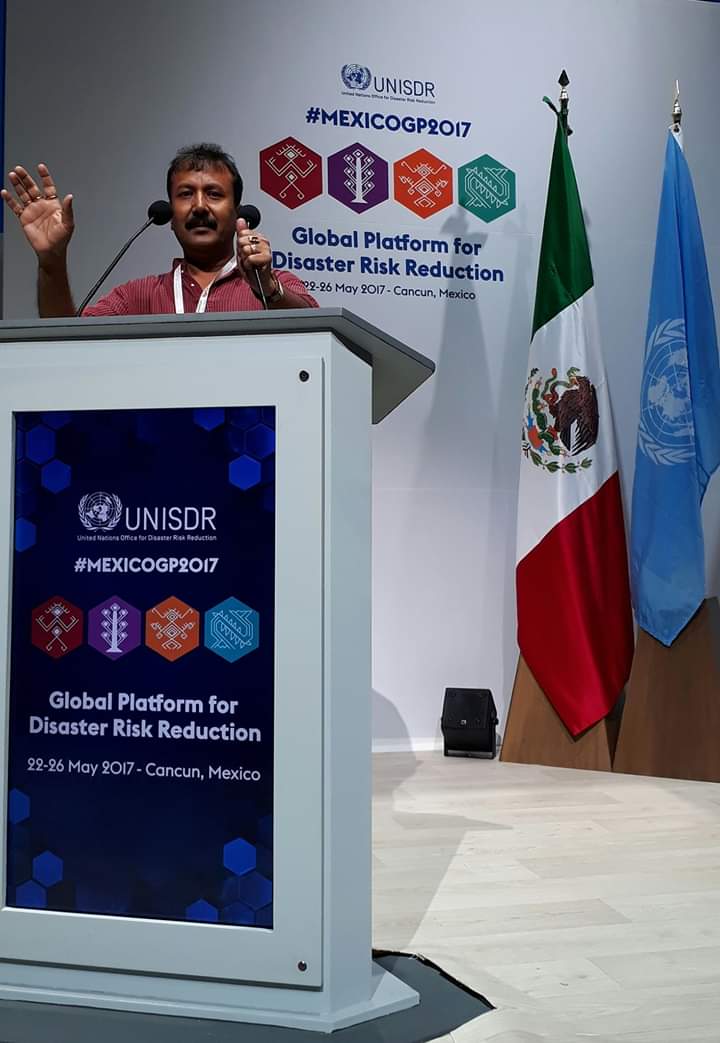
Mr. Banik’s collaboration with UNICEF enabled him to engage deeply with health and hygiene programs, particularly those focused on sanitation in rural and tribal communities. Through a pilot project with UNDP, he explored integrated models of natural resource management that linked environmental conservation with income generation for forest-dwelling populations.
His leadership in biodiversity research has been widely acknowledged through his work with the Japan International Cooperation Agency (JICA) and the Tripura Biodiversity Board. Serving as a Principal Investigator and Core Committee Member, he led studies to document Tripura’s bird and mammal species, a critical step in preserving the region’s ecological heritage. Furthering his conservation efforts, he conducted a significant year-long study on the White-Rumped Vulture, in association with the Royal Society for the Protection of Birds (RSPB), UK—one of the world’s most respected organizations in avian protection.
In the scientific and academic domain, Mr. Banik’s involvement with the National Bureau of Fish Genetic Resources (NBFGR) as a regional committee member enabled him to contribute to India’s policy and research in aquatic biodiversity. His representation in the Indian Bird Conservation Network (IBCN) as Tripura’s State Coordinator for six years connected him to a national platform of ornithologists, researchers, and conservationists, thereby expanding both his technical insights and advocacy reach.
Collaborations with leading institutions such as ATREE (Ashoka Trust for Research in Ecology and the Environment) and Ford Foundation allowed him to merge conservation science with vocational training programs for youth and women in Tripura and Darjeeling.
These partnerships were crucial in evolving Dishari’s grassroots programs into holistic, livelihood-linked conservation initiatives.
On the technology and innovation front, Mr. Banik worked with AFPRO (Action for Food Production), supported by the Sir Dorabji Tata Trust (SDTT), to promote sustainable irrigation models in tribal farming areas. Parallelly, programs with Reach India and USHA International empowered rural women through textile and tailoring-based skill development.
His financial ecosystem expanded through collaborations with institutions like SIDBI (Small Industries Development Bank of India), RGVN, and NEDFi (North Eastern Development Finance Corporation). These organizations supported his work in building credit linkages, promoting SHGs (Self-Help Groups), and fostering rural entrepreneurship.
Corporate Partnerships for Integrated Welfare
Across all these engagements, what stands out is Mr. Banik’s ability to adapt global models to local needs, ensuring that international exposure translates into real-world outcomes for marginalized communities. His network has not only validated his work but has also positioned him as a bridge between grassroots innovation and institutional excellence.
Contact us